Walk Cycles
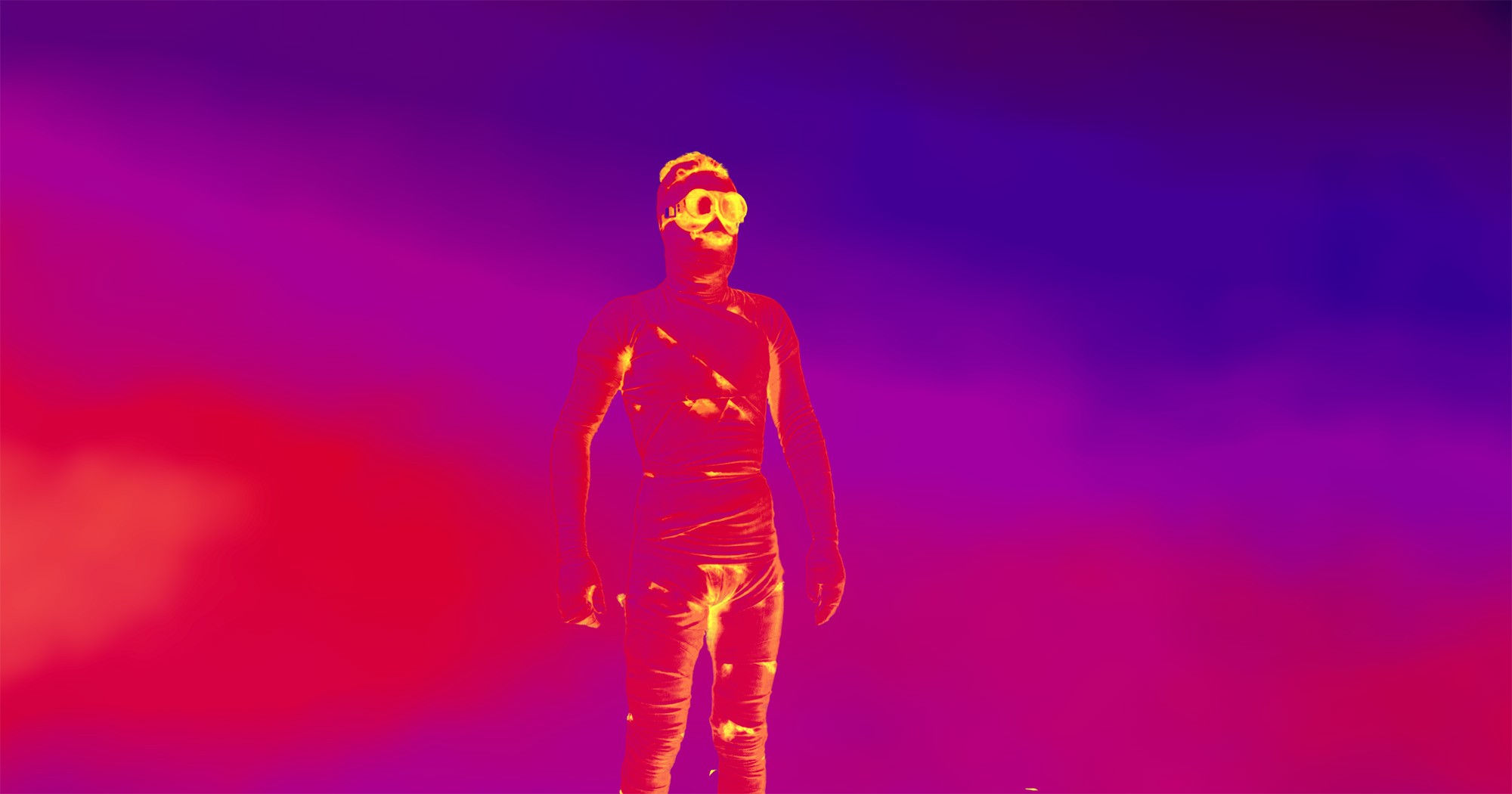
The film stages a series of looped “walk cycles,” borrowing the animation term for the minimal sequence of frames needed to simulate continuous movement. The loop becomes a metaphor for the burden placed on civilians under mililtary occupation to rehearse legible, “non-threatening” behavior in the seconds before a drone operator decides whether they live or die. Each cycle lasts no more than twenty seconds, mirroring the narrow temporal window in which such judgments are made.
A figure haunts the work: eerily similar to the bandaged man from the 1933 film The Invisible Man, who wraps himself in prosthetics to become recognizable as a human. He embodies a desperate need for visibility, constructing a body to secure social legibility. Walk Cycles invokes this characteristic not as a literal reference to the Invisible Man but as a symbol of the coerced self-presentation demanded under persistent surveillance.
As the figure’s own gait begins to falter, the gesture exposes how the pressure to “appear civilian” erodes selfhood. Through repeated walks, Walk Cycles asks whether recognition can ever guarantee humanity—or whether the performance of legibility only reinforces the gaze that denies it.